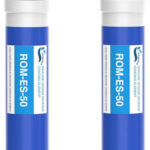
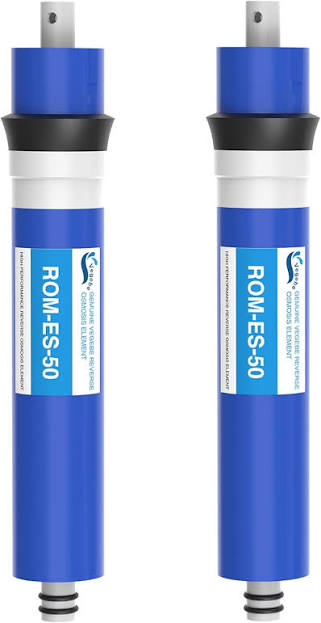
RO Membrane Price refers to the cost of purchasing a replacement membrane for a reverse osmosis water-treatment system. However, the price depends on far more than the membrane itself. Capacity, specifications, water quality, system pressure, membrane type, installation, and maintenance can significantly affect the final replacement cost. Understanding these factors helps households, businesses, and water producers make smarter and more cost-effective decisions.


What Is RO Membrane Price?
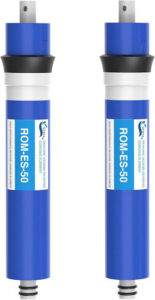
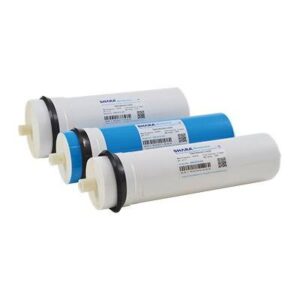
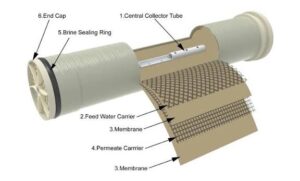
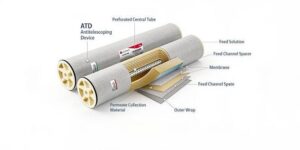
An RO membrane is a semi-permeable filtration component used in reverse osmosis to separate many dissolved contaminants from water. Pressurized water passes through the membrane while many salts, minerals, and unwanted substances remain in the reject stream. This makes the membrane central to reverse osmosis water treatment, drinking-water production, and commercial filtration.
Therefore, RO Membrane Price should be considered within the complete treatment system. A membrane for a small residential ro system can have very different specifications from one serving a commercial or industrial plant. Capacity, operating pressure, water quality, membrane dimensions, and expected filtration performance all matter.
1. Membrane Capacity Directly Influences Cost
Membrane capacity is one of the most important factors affecting replacement cost. Capacity is commonly expressed as GPD, meaning gallons per day. A 400 GPD RO system has different production requirements from a high-flow commercial or industrial installation.
Residential systems may use smaller membranes designed for kitchens, apartments, offices, or small businesses. Commercial facilities may require multiple membranes for continuous water production. Industrial plants can require high-capacity, heavy-duty configurations with specialized pumps and membrane housings.
When comparing RO membrane price, always check the GPD specification. Comparing two membranes simply because they look similar can produce an expensive and avoidable mistake.
2. Feed-Water Quality Can Shorten Membrane Life
Incoming water quality has a powerful effect on membrane performance and replacement frequency. Borehole water, well water, and other sources can contain sediment, iron, hardness, salts, and dissolved minerals. Without suitable pretreatment, these contaminants can cause fouling or scaling.
Dirty water, cloudy water, rusty water, unpleasant smell, and high TDS can indicate water-quality problems requiring attention. A membrane exposed continuously to unsuitable feed water may lose performance faster. The cheapest replacement can therefore become costly when its useful life is shortened.
Water testing should precede a major replacement decision. Sediment filtration, carbon filtration, iron removal, or water softening may be necessary before the membrane.
3. Membrane Specifications Determine Compatibility
Not every reverse osmosis membrane is interchangeable. Membranes differ in dimensions, GPD capacity, operating pressure, rejection performance, construction, and application. Selecting the wrong specification can reduce water production or cause system-performance problems.
A domestic reverse osmosis system for home differs significantly from a commercial reverse osmosis system or industrial installation. Hospitals, hotels, restaurants, factories, schools, estates, and water-production facilities can have different flow and treatment requirements.
Before purchasing a replacement, check the original membrane label and system documentation. Confirm the membrane size, capacity, pressure requirement, housing compatibility, and filtration objective.
4. Pretreatment Affects the Real Replacement Cost
A new membrane cannot compensate for poor pretreatment. Sediment and carbon filters protect the membrane from particles and certain contaminants. If these filters are exhausted, the new membrane may deteriorate faster than expected.
A complete maintenance inspection should include the sediment filter, carbon filter, pump, membrane housing, pressure tank, tubing, valves, and connections. Depending on the water source, a softener or iron-removal filter may also be required.
This is why the advertised membrane price may not represent the actual project cost. A realistic quotation should consider replacement parts, installation, testing, flushing, and maintenance.
5. Operating Pressure and Pump Performance Matter
Reverse osmosis depends on pressure to push water through the semi-permeable membrane. Insufficient pressure can reduce permeate production and affect rejection performance. Excessive or unstable pressure can also create equipment problems.
Check the pump, pressure readings, flow rate, and reverse osmosis tank pressure before replacing the membrane. A failing pump can produce symptoms that appear similar to membrane failure. Replacing the membrane without diagnosing the pressure problem can become a costly mistake.
A professional troubleshooting guide should therefore evaluate the complete system. This approach helps determine whether the membrane genuinely requires replacement.
6. Installation and Application Can Increase Total Cost
The installation environment can significantly affect replacement expenses. An under sink reverse osmosis unit normally requires less work than a large commercial treatment plant. Whole-house systems can involve additional plumbing, storage, pretreatment, pumps, and distribution requirements.
Installation requirements also vary by application. A system for home, office, hotel, hospital, restaurant, factory, school, church, or pure-water business may require different configurations.
Regional conditions can also influence system design. In Nigeria, applications across Lagos, Abuja, Port Harcourt, Kaduna, Uyo, Asaba, Warri, Ibadan, Benin, and Bonny Island may involve different water sources and treatment requirements.
The same principle applies across Accra, Kumasi, Sekondi-Takoradi, Tamale, Sunyani, Tema, Cape Coast, Elmina, Winneba, Keta, Ada Foah, and Ho. Regional assessment helps ensure that replacement specifications match actual water conditions.


7. Brand, Quality, and Availability Influence Price
Membrane quality and supplier availability can affect the final price. Premium or specialized membranes may cost more because of their specifications, capacity, materials, or intended application. However, the most expensive membrane is not automatically the most appropriate choice.
A reliable buying guide should prioritize compatibility, documented specifications, expected membrane life, supplier support, and replacement availability. Warranty terms and professional installation can also influence total ownership cost.
Availability can matter when businesses need replacement parts quickly. Choosing a trusted supplier with appropriate technical knowledge can reduce delays and help maintain continuous water production.
RO Membrane Price vs Total Replacement Cost
A proper RO membrane price guide should distinguish the component price from the complete replacement cost. The membrane is only one part of the treatment system.
Consider these cost elements:
- Membrane purchase price.
- GPD capacity and specifications.
- Shipping and logistics.
- Installation cost.
- Pretreatment replacement.
- Membrane housing condition.
- Pump and pressure requirements.
- Testing and commissioning.
- Maintenance cost.
- Expected membrane life.
This cost breakdown provides a clearer picture of the total investment. It also makes price comparisons more meaningful between domestic, commercial, and industrial systems.
Common Mistakes When Buying an RO Membrane
One common mistake is choosing a membrane based only on the cheapest available price. Another is ignoring water quality and purchasing a membrane without checking GPD capacity or pressure requirements.
Some buyers also replace the membrane while leaving exhausted sediment and carbon filters in place. This can compromise the new component and create disappointing before-and-after results.
The better approach is simple. Test the water, inspect the system, verify specifications, compare the complete cost, and use professional installation where necessary.
Where Professional Water-Treatment Support Matters
VistaGreen provides water-treatment solutions for residential, commercial, and industrial applications across Nigeria and other African markets. Its technical approach considers water quality, system configuration, filtration requirements, replacement components, and long-term maintenance.
Customers in Cotonou, Lomé, Abidjan, Monrovia, Freetown, Banjul, Cape Verde, and Dakar may also encounter different water-treatment conditions. Local water chemistry and intended application should therefore influence membrane selection.
A professional assessment can help identify the correct membrane specification, pretreatment requirements, installation needs, and maintenance schedule. This creates a more transparent and reliable replacement process.
Choosing the Right Replacement Membrane
The right membrane depends on the system rather than a generic claim about the best RO membrane. Residential, commercial, and industrial systems have different capacity and operating requirements.
Some installations use a 5 stage reverse osmosis system, while others use four, six, or seven filtration stages. Additional components can include UV treatment, remineralization, carbon filtration, water softening, or pressure tanks.
The goal is not simply to find an affordable membrane. The goal is to select a compatible, efficient, reliable component that supports consistent water quality and reasonable running costs.
Frequently Asked Questions
What determines RO Membrane Price?
The main factors include capacity, specifications, membrane quality, water conditions, system compatibility, operating pressure, application, availability, and installation requirements.
Why can two similar membranes have different prices?
They may have different GPD ratings, construction, rejection performance, operating requirements, quality levels, or intended applications.
Does borehole water affect membrane replacement costs?
Yes. Borehole water can contain sediment, iron, hardness, and dissolved minerals that may increase membrane fouling or scaling without proper pretreatment.
Should filters be replaced with the membrane?
The sediment and carbon filters should be inspected during replacement. Exhausted pretreatment filters may need replacement to protect the new membrane.
Is a cheaper membrane always more affordable?
Not necessarily. A lower purchase price can become expensive if the membrane has poor compatibility, shorter service life, or unsuitable performance.
Conclusion
RO Membrane Price is only one part of the real replacement equation. Capacity, water quality, specifications, pretreatment, pressure, installation, quality, and maintenance all influence the final cost.
A careful assessment helps prevent expensive mistakes while improving filtration performance and supporting consistent water production. Whether the application is residential, commercial, or industrial, the membrane should match the system and incoming water.
VistaGreen supports professional water-treatment requirements with solutions designed around practical application, water quality, system performance, and long-term reliability.
Get Your Water Treatment Solution!
🌐 Visit: https://www.vistagreen.africa/
📧 Email: info@vistagreen.africa
📞 Call/WhatsApp: +233 208 995 720, +234 911 416 6874
VistaGreen — Engineering Innovation. Building Trust.
At Vista Green, we provide Portable Toilets in Accra, Portable Toilet Price in Ghana, Mobile Toilets in Cotonou, Mobile Toilet for Hire, Portable Toilets for Seniors, Portable Toilets for RVs, FRP Portable Toilet, Readymade Toilet and Bathroom, Emergency Portable Toilet Rental, Portable Toilet Business in Ghana, Portable Toilet Rental Cost, Portable Chemical Toilet vs Flush Toilet, Portable Sink and Toilet, Portable Toilet Price in Cotonou, Portable Toilets for Sale in Ghana,
Water Filter and Purifier for Tank, Water Purifier in Ghana, Osmosis Water Purification, RO Water Purifier, Reverse Osmosis Machine, RO Technology in Water Purifier, Reverse Osmosis Water Treatment, Under Sink Reverse Osmosis System, whole home reverse osmosis, Residential Reverse Osmosis System, Tankless Reverse Osmosis System, Portable Reverse Osmosis System, Countertop Reverse Osmosis System, Water Softener and Reverse Osmosis System, RO Membrane, RO membrane price,