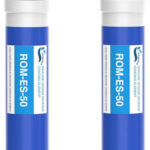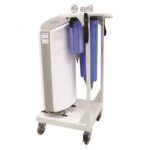
Whole Home Reverse Osmosis is a centralized water purification solution that treats water before it reaches multiple outlets throughout a property. Unlike an under sink reverse osmosis unit, it is designed to provide treated water across the home. The process uses pressure to push water through a specialized ro membrane that reduces many dissolved substances. It can be an effective solution for households dealing with high TDS, hard water, unpleasant odours, sediment, or other water-quality concerns.
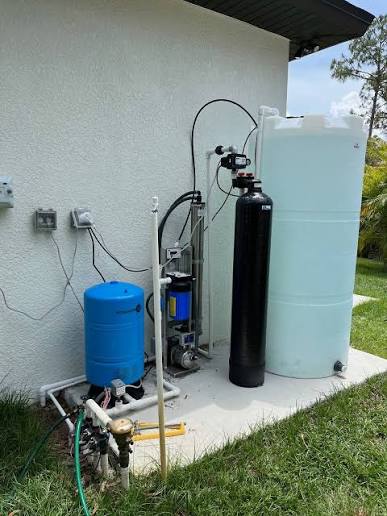
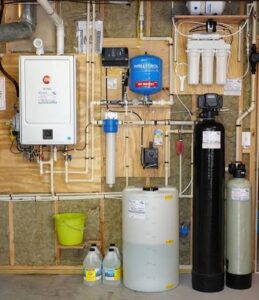
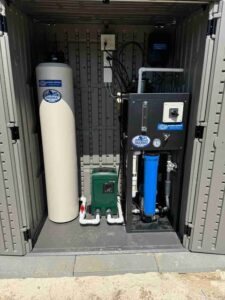
A complete whole house reverse osmosis system normally includes pre-filtration, an RO membrane, pressure equipment, storage, and distribution components. Depending on the source, the system may also require a sediment filter, carbon filter, iron removal, softening, UV treatment, or remineralization filter. This configuration makes full-house RO different from a basic water tank filter or conventional water filter and purifier for tank. The correct system should always be selected according to water testing, household demand, and required treatment performance.


8 Powerful Benefits of Whole Home Reverse Osmosis
1. Treats Water Across the Entire Property
The most important advantage of Whole Home Reverse Osmosis is centralized treatment. Instead of purifying only drinking water at one faucet, the system can distribute treated water throughout the property. This approach can benefit large families, estates, apartments, offices, hotels, schools, and selected commercial facilities. It creates a consistent water-treatment strategy rather than relying on multiple separate filters.
A properly engineered whole house ro system can connect treatment equipment to a storage tank and household distribution network. This arrangement can support kitchen, bathroom, laundry, and other water outlets. However, whole-house treatment requires careful hydraulic design because household flow demand can be considerably higher than drinking-water demand. Capacity, pressure, storage, and wastewater management must therefore be considered together.
2. Reduces Many Dissolved Substances – whole home reverse osmosis
Reverse osmosis filtration uses a semi-permeable membrane to separate water from many dissolved substances. The membrane is the central component of a reverse osmosis water filtration system. Its performance depends on feed-water quality, operating pressure, membrane specifications, and system design. This makes laboratory water analysis an important first step before installation.
For challenging sources, pre-treatment can protect the reverse osmosis membrane from excessive sediment, iron, hardness, and scaling. A water filter sediment stage can remove larger particles before water reaches the membrane. Activated carbon can provide additional protection against chlorine and certain taste-related compounds. These stages work together to create a more reliable reverse osmosis water treatment system.
3. Improves Taste, Clarity, and Everyday Water Experience
Water containing excessive minerals, sediment, or certain dissolved substances may taste unpleasant. Proper reverse osmosis water purification can reduce many substances responsible for undesirable taste and appearance. The difference can be noticeable when drinking chilled water, preparing coffee, or cooking meals. Cleaner-tasting water can make everyday hydration more convenient and refreshing.
Some systems add reverse osmosis with remineralization after membrane filtration. A remineralizing water filter can restore selected minerals and modify the final water profile. Other installations may include reverse osmosis with UV light where additional microbial treatment is appropriate. These additions should be selected according to water testing rather than simply choosing the system with the most stages.
4. Helps Manage Hard Water and Scaling – whole home reverse osmosis
Hard water contains elevated concentrations of minerals that can contribute to scaling. Deposits may develop inside plumbing, water heaters, appliances, faucets, and other components. A water softener and reverse osmosis system can address hardness and dissolved contaminants through different treatment mechanisms. The two technologies should not be viewed as substitutes because they perform different functions.
For some properties, pre-treatment may include a softener, sediment filtration, carbon filtration, or iron removal. A sand filter for home water tank may also help manage certain particulate loads. Properties with iron-rich water may require an iron removal filter for water tank before RO. Correct pre-treatment can improve membrane life and reduce avoidable maintenance costs.
5. Supports Different Property Types – whole home reverse osmosis
A centralized system can be designed for more than ordinary residential applications. Whole Home Reverse Osmosis may be considered for large homes, estates, apartment buildings, offices, churches, hotels, restaurants, hospitals, and schools. Larger facilities may instead require a commercial reverse osmosis system with higher production capacity. Industrial facilities can require an industrial reverse osmosis system or dedicated water-treatment plant.
The required GPD rating depends on consumption and peak demand. A small residential system and a 400 GPD RO system should not be selected using the same criteria. Larger applications may require storage tanks, multiple membranes, booster pumps, automated controls, and advanced monitoring. Professional sizing helps avoid both inadequate flow and unnecessary capital expenditure.
6. Creates a Flexible Water-Treatment System – whole home reverse osmosis
Modern RO systems can be configured around different water-quality challenges. Options include 4 stage reverse osmosis system, 5 stage reverse osmosis system, 6 stage reverse osmosis system, and 7 stage reverse osmosis system configurations. Some systems are tankless, while others use a reverse osmosis tank for stored purified water. The correct design depends on application rather than the number of stages alone.
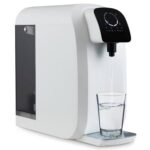
Point-of-use systems remain useful where only drinking water requires advanced treatment. A reverse osmosis water filter under sink saves space and focuses treatment at the kitchen. A countertop reverse osmosis system offers another compact option. Whole-home systems are better suited when broader property-wide treatment is the primary objective.
7. Can Be Designed for Borehole and Well Water – whole home reverse osmosis
Private water sources can have complex treatment requirements. Borehole water and well water may contain sediment, iron, hardness, salts, or other dissolved substances. A reverse osmosis system for well water can be effective when the system is properly designed. However, untreated source water should not automatically be sent directly to the membrane.
Testing should identify TDS, hardness, iron, sediment, microbial conditions, and other relevant parameters. The treatment train can then be designed around those findings. This may involve a water tank purifier, sediment filter, carbon stage, softener, iron removal, and RO. Such a step-by-step approach is safer and more cost-effective than selecting equipment based solely on an advertised price.
8. Provides Long-Term Water Management Value – whole home reverse osmosis
A properly designed whole home reverse osmosis water system can become an important part of a property’s water infrastructure. It combines centralized treatment with storage, pressure management, filtration, and distribution. The system can be scaled according to household requirements and future demand. This makes it a potentially valuable investment for properties with persistent water-quality problems.
The total cost should include equipment, installation cost, electricity, replacement filters, membrane replacement, servicing, and wastewater handling. The reverse osmosis system price alone does not represent the complete ownership cost. A cheaper unit may become expensive if replacement parts are unavailable or maintenance is difficult. A reliable supplier should provide specifications, quotation, installation support, and a practical maintenance plan.

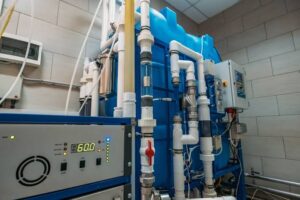
How Whole Home Reverse Osmosis Works
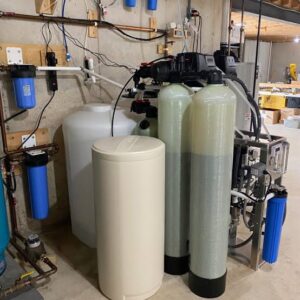
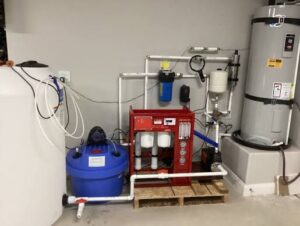
The process normally begins with pre-treatment. Incoming water passes through sediment filtration to remove particles such as sand, rust, and suspended matter. Carbon filtration may then reduce chlorine and compounds affecting taste and odour. Additional softening or iron removal can be introduced when source-water analysis requires it.
The pre-treated water reaches the RO membrane under pressure. The membrane performs the central separation process in reverse osmosis water purification. Treated water proceeds toward storage or distribution, while concentrated wastewater leaves through a designated drain. Depending on the design, final treatment may include UV or remineralization.
Features and Specifications to Check – whole home reverse osmosis
When choosing a system, consider membrane quality, filtration capacity, pressure requirements, storage volume, pump specifications, and replacement availability. Check whether the system is designed for residential, commercial, or industrial use. Also examine the expected membrane life, maintenance schedule, and availability of replacement parts. These details are more useful than choosing equipment based only on online popularity.
Ask for a complete cost breakdown covering equipment, installation, pre-treatment, storage, electrical requirements, servicing, and replacement components. You should also confirm whether professional installation and after-sales maintenance are available. These factors can significantly affect the running cost and long-term reliability of the system. A good buying guide should therefore evaluate lifecycle value rather than purchase price alone.
Whole Home Reverse Osmosis vs Under-Sink and Countertop RO
An under sink reverse osmosis system is designed primarily for point-of-use drinking and cooking water. A countertop reverse osmosis system provides a compact solution where permanent installation is undesirable. By contrast, a whole house reverse osmosis filter is designed for wider water distribution. Each option has advantages and disadvantages.
For a small household concerned mainly about drinking water, point-of-use RO may be sufficient. For a large family with broader water-quality concerns, full-house treatment may be more appropriate. Commercial properties may need a commercial RO system, while factories may require an industrial RO water system. The right choice depends on water demand, source quality, budget, and treatment objectives.
Common Problems and Maintenance Guide
Common RO problems include low flow, declining production, leaks, unpleasant taste, high TDS, scaling, and premature membrane failure. These issues may result from clogged filters, inadequate pressure, poor pre-treatment, incorrect installation, or overdue servicing. Monitoring system performance can reveal warning signs before failures become costly. Regular maintenance is therefore essential for reliable operation.
Changing reverse osmosis filters should follow manufacturer guidance and actual water conditions. Replacing reverse osmosis filters too late can reduce system performance and place unnecessary stress on the membrane. Technicians should also inspect pumps, connections, storage tanks, pressure levels, and sanitation requirements. Proper maintenance can extend equipment life and support consistent water quality.
Regional Water-Treatment Relevance
Water conditions differ across Nigeria, making local assessment important. Properties in Lagos, Abuja, Port Harcourt, Kaduna, Uyo, Asaba, Warri, Ibadan, and Benin may have different source-water characteristics. Similar considerations apply in Kano, Jos, Sokoto, Minna, Zaria, Katsina, Dutse, Maiduguri, Gombe, Bauchi, Yola, and Jalingo. The same principle applies throughout Enugu, Makurdi, Abakaliki, Awka, Onitsha, Owerri, and Umuahia.
Water-treatment requirements can also vary across Rivers State, Akwa Ibom State, Delta State, Edo State, Abeokuta, Ogun State, Ilorin, Lokoja, Akure, Oshogbo, Ekiti, and Ile-Ife. Areas around Suleja, Karu, Mararaba, Keffi, Gurara, Zuba, Gwagwalada, Kuje, Bwari, and Abaji may require source-specific treatment. Professional water testing provides the foundation for selecting the appropriate equipment.
Across West Africa, similar requirements exist in Accra, Kumasi, Cotonou, Lomé, Abidjan, Monrovia, Freetown, Banjul, Cape Verde, and Dakar. Additional applications occur in Sekondi-Takoradi, Tamale, Sunyani, Tema, Cape Coast, Elmina, Winneba, Keta, Ada Foah, and Ho. Climate, source type, infrastructure, and local water chemistry can all influence treatment design. A regional approach should therefore remain technically flexible.
Why Choose VistaGreen?
VistaGreen provides engineered water-treatment solutions for residential, commercial, institutional, and selected industrial applications. Its approach focuses on matching equipment to source-water conditions rather than promoting a universal configuration. This can include RO, sediment filtration, carbon filtration, softening, UV, storage, and remineralization where appropriate. Professional assessment helps customers make more informed equipment decisions.
The company can support system selection, quotations, installation, maintenance, and replacement requirements. Its solutions can be adapted for homes, offices, estates, hospitality facilities, schools, churches, and production environments. Customers can therefore evaluate the complete treatment process rather than focusing only on the reverse osmosis water filter price. This supports better long-term planning and dependable water-treatment performance.
Frequently Asked Questions
Is Whole Home Reverse Osmosis worth it?
It can be worthwhile when water-quality concerns affect multiple outlets throughout a property. The decision should consider source-water testing, consumption, treatment objectives, installation requirements, and lifecycle costs.
What is the difference between whole-house RO and under-sink RO?
Whole-house RO treats water for broader distribution across a property. Under-sink RO generally focuses on drinking and cooking water at a specific point of use.
Can whole-house RO treat borehole water?
Yes, but borehole water should be tested before installation. Sediment, iron, hardness, high TDS, and other conditions may require pre-treatment.
Does RO remove minerals?
RO can reduce many dissolved minerals and salts. A remineralization filter can be added when restoring selected minerals is appropriate.
How much does whole-house RO cost?
There is no universal price. Equipment capacity, membrane type, pre-treatment, pumps, storage, installation, source-water quality, and maintenance requirements all affect total cost.
Does a whole-house RO system need maintenance?
Yes. Filters, membranes, pumps, tanks, and related components require periodic inspection and servicing. Timely maintenance helps preserve performance and reduce avoidable repair costs.
Conclusion
Whole Home Reverse Osmosis offers a powerful way to approach water treatment across an entire property. It can reduce many dissolved substances while supporting cleaner, more consistent water throughout the building. However, the best results depend on proper water testing, system sizing, pre-treatment, installation, and maintenance. Choosing equipment based solely on the cheapest price can create avoidable problems later.
A well-designed system should match the property’s water source, consumption, pressure, storage requirements, and treatment objectives. Whether you need residential purification, commercial water treatment, or a larger custom installation, professional assessment provides a stronger starting point. Full-house RO is not simply about buying a membrane. It is about designing a complete water-treatment system that delivers reliable value over time.
Get Your Water Treatment Solution!
🌐 Visit: https://www.vistagreen.africa/
📧 Email: info@vistagreen.africa
📞 Call/WhatsApp: +233 208 995 720, +234 911 416 6874
VistaGreen — Engineering Innovation. Building Trust.
At Vista Green, we provide Portable Toilets in Accra, Portable Toilet Price in Ghana, Mobile Toilets in Cotonou, Mobile Toilet for Hire, Portable Toilets for Seniors, Portable Toilets for RVs, FRP Portable Toilet, Readymade Toilet and Bathroom, Emergency Portable Toilet Rental, Portable Toilet Business in Ghana, Portable Toilet Rental Cost, Portable Chemical Toilet vs Flush Toilet, Portable Sink and Toilet, Portable Toilet Price in Cotonou, Portable Toilets for Sale in Ghana,
Water Filter and Purifier for Tank, Water Purifier in Ghana, Osmosis Water Purification, RO Water Purifier, Reverse Osmosis Machine, RO Technology in Water Purifier, Reverse Osmosis Water Treatment, Under Sink Reverse Osmosis System, whole home reverse osmosis,