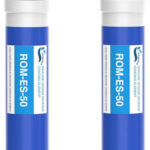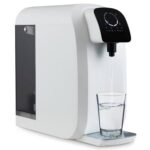
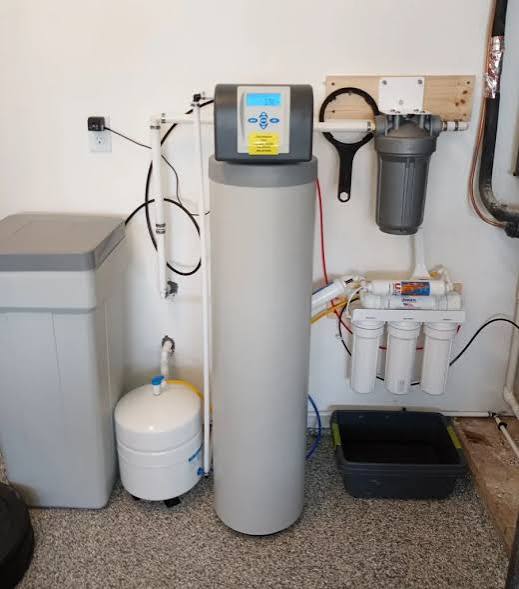
Water Softener and Reverse Osmosis System is a combined water-treatment approach that first reduces hardness-causing minerals and then uses reverse osmosis to remove many dissolved impurities. This combination matters because hard water can burden filtration equipment, while reverse osmosis provides deeper purification for drinking and production applications. A water softener primarily addresses calcium and magnesium that cause scaling, while an reverse osmosis system uses a semi-permeable membrane to reduce dissolved substances. Together, they provide a powerful, practical approach to improving water quality for homes, offices, hotels, hospitals, schools, factories, and commercial facilities.
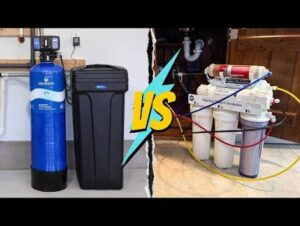


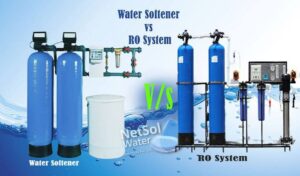
What Is a Water Softener and Reverse Osmosis System?
A Water Softener and Reverse Osmosis System combines two complementary technologies rather than treating every water-quality problem with one filter. The softener typically uses ion exchange to reduce calcium and magnesium hardness before water reaches sensitive treatment components. The RO stage then pushes pretreated water through a ro membrane, reducing many dissolved salts, minerals, and other contaminants. The result can be cleaner, better-tasting water when the system is correctly designed for the source-water characteristics.
For borehole water, well water, municipal supplies, or mineral-heavy water, pretreatment can be especially important. Hard water may create scaling, cloudy deposits, soap inefficiency, and shortened equipment life. RO treatment addresses a different category of problems, including high TDS and certain dissolved contaminants. Therefore, the technologies should be viewed as complementary rather than interchangeable.
1. Reduces Hard Water Before RO Treatment
One major advantage of combining a softener with RO is better management of hard water before membrane filtration. Calcium and magnesium can accumulate on membrane surfaces and contribute to scaling. A properly sized softener reduces these hardness ions before water enters the RO equipment. This can support more consistent performance and simplify the maintenance guide for the overall treatment system.
2. Supports Longer RO Membrane Life – Water Softener and Reverse Osmosis System
RO membranes are important components in residential and commercial purification systems. Excessive hardness can increase scaling pressure and make cleaning or replacement more frequent. Pretreatment through a softener can therefore help protect the membrane when hardness is a significant part of the feed-water profile. Actual membrane life still depends on feed-water chemistry, operating pressure, pretreatment, usage, and maintenance.
3. Improves Drinking Water Quality – Water Softener and Reverse Osmosis System
A well-designed RO system can reduce dissolved solids that affect taste and water quality. This makes RO useful for drinking water, kitchens, offices, restaurants, hotels, and other applications where water taste matters. Depending on the source, additional treatment such as a carbon filter, sediment filter, UV light, or remineralization filter may also be appropriate. The right configuration should be based on laboratory water analysis rather than assumptions.
4. Helps Control Scaling Throughout the Property
Hard water can leave chalky deposits on taps, heaters, shower fittings, boilers, and appliances. A water softener addresses hardness across the treated water supply, making it useful for whole house reverse osmosis system designs where different treatment points serve different purposes. RO can then provide additional purification where lower-TDS water is required. This separation of functions can be more efficient than forcing one technology to solve every water-quality problem.
5. Creates a More Complete Treatment Strategy – Water Softener and Reverse Osmosis System
A common mistake is selecting an RO system without considering upstream water conditions. Sediment, iron, unpleasant smell, hardness, high TDS, and microbial concerns may require different treatment stages. A typical reverse osmosis filtration setup can include sediment filtration, carbon filtration, softening, RO, remineralization, and UV depending on the application. This creates a complete treatment strategy rather than relying on a single filter.
6. Protects Commercial and Industrial Equipment
Commercial facilities often depend on water for cleaning, production, cooling, hospitality, and other operations. Hard water can cause scaling inside pipes, heaters, membranes, and process equipment. RO can reduce dissolved solids where purified water is required for specific processes. For hotels, hospitals, factories, restaurants, estates, and production facilities, a commercial reverse osmosis system should be engineered according to flow rate and water chemistry.
7. Offers Flexible System Configurations – Water Softener and Reverse Osmosis System
There is no universal RO configuration for every property. A home may require an under sink reverse osmosis unit, while a business may need a high-flow commercial system. Options include countertop reverse osmosis, tankless designs, pressure tanks, remineralization, UV treatment, and larger multi-stage systems. Industrial users may require high-capacity membranes, pumps, membrane housings, and automated controls.
8. Provides Better Protection for Appliances – Water Softener and Reverse Osmosis System
Hard water can affect water heaters, washing machines, dishwashers, refrigerators, and plumbing fixtures. Softening can reduce the mineral deposits associated with hardness before water reaches these appliances. RO can provide separately treated water for drinking and food preparation where appropriate. This approach can help households distinguish between whole house conditioning and point-of-use purification.
9. Makes Water Treatment More Application-Specific
A smart buying guide begins with the intended application rather than the advertised number of filtration stages. A residential system may differ significantly from a treatment plant designed for a pure-water business. Important specifications include GPD capacity, pressure requirements, membrane type, recovery rate, feed-water TDS, hardness, iron, sediment load, and expected daily consumption. For larger facilities, professional water analysis should precede equipment selection.
10. Can Reduce Avoidable Treatment Problems
Using the wrong technology can create costly maintenance problems. Installing RO without suitable pretreatment may expose membranes to scaling, fouling, or excessive sediment loading. Conversely, using a softener alone does not provide the same dissolved-solids reduction associated with RO. The key is understanding water softener and reverse osmosis as different technologies that address different water-quality challenges.

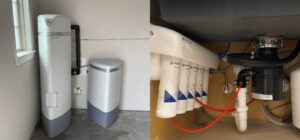
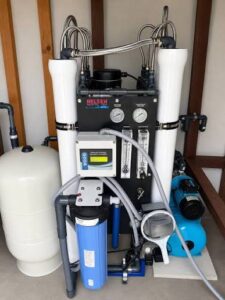

Water Softener and Reverse Osmosis System: How the Process Works
A typical treatment sequence may begin with a sediment filter that captures suspended particles. Depending on the source, additional pretreatment can target iron, chlorine, organic matter, or hardness before the RO stage. Water then passes through the reverse osmosis membrane, where pressure drives water through the membrane while many dissolved substances are rejected. A post-treatment stage may include remineralization, UV, or carbon filtration depending on the intended use.
This step-by-step approach is particularly relevant to borehole and well-water applications. A water analysis can reveal whether the system requires an iron removal filter for water tank, sand filtration, activated carbon, softening, or other pretreatment. For drinking applications, the final configuration should also consider microbiological quality. Treatment should therefore be engineered around measured water-quality problems rather than simply selecting the highest number of stages.
Softener vs RO: What Is the Difference?
A softener and RO system solve different problems. The softener primarily reduces calcium and magnesium hardness, while RO reduces many dissolved substances through membrane separation. A softener does not replace an RO system when low-TDS drinking water is required. Likewise, RO does not necessarily provide economical whole-property hardness management by itself.
This distinction is important when comparing a reverse osmosis water treatment system with a complete property-wide treatment design. For drinking water, RO can be installed under the sink or at another point of use. For broader water conditioning, a softener may treat a larger volume before selected water streams receive additional purification. The appropriate arrangement depends on source-water quality, water demand, budget, and intended use.
Common Problems and Maintenance Considerations
Every treatment system requires routine monitoring. Common warning signs include declining flow, unusual taste, increasing TDS, pressure changes, leaks, scaling, or reduced production capacity. Filters and membranes have finite service lives, although replacement intervals vary with water quality and usage. A professional maintenance guide should cover filter replacement, membrane inspection, pressure checks, sanitation, and water-quality testing.
The cost of reverse osmosis system ownership should therefore include equipment, installation, replacement filters, membrane replacement, electricity where pumps are required, water consumption, and servicing. The initial price alone does not represent total cost. For commercial applications, operators should also consider production capacity, recovery rate, downtime, spare parts, and professional maintenance support.
Choosing the Right System for Nigeria and Africa
Water conditions vary significantly across African markets and even between neighbouring communities. Businesses in Nigeria, Ghana, Benin, Togo, Côte d’Ivoire, Liberia, Sierra Leone, The Gambia, Senegal, and Cape Verde may encounter different combinations of hardness, salinity, sediment, iron, microbial contamination, and TDS.
For example, treatment requirements can differ between Accra, Kumasi, Tema, Sekondi-Takoradi, Tamale, Sunyani, Cape Coast, Elmina, Winneba, Keta, Ada Foah, and Ho. Similar differences can occur across Cotonou, Lomé, Abidjan, Monrovia, Freetown, Banjul, Cape Verde, and Dakar. A reliable supplier should therefore recommend equipment after reviewing water analysis, flow requirements, intended application, and installation conditions.
For homes, offices, hotels, restaurants, hospitals, churches, schools, estates, factories, and water-production businesses, system specifications should match actual demand. A small household may need a residential RO unit, while a production facility may require an industrial RO plant. This approach helps avoid both under-sizing and unnecessarily expensive equipment.
Water Softener and Reverse Osmosis System Buying Guide
Before purchasing, consider these essential factors:
- Water quality: Test hardness, TDS, iron, sediment, salinity, pH, and microbiological parameters where relevant.
- Capacity: Match GPD or flow capacity with actual daily consumption.
- Pretreatment: Determine whether sediment, carbon, iron removal, or softening is required.
- Membrane: Confirm membrane specifications, compatibility, availability, and replacement cost.
- Configuration: Consider 3-stage, 4-stage, 5-stage, 6-stage, or 7-stage treatment according to actual requirements.
- Installation: Allow for plumbing, drainage, pressure, electrical requirements, and available space.
- Maintenance: Confirm replacement parts, servicing requirements, membrane availability, and professional support.
- Total cost: Compare equipment price, installation cost, running cost, maintenance cost, and replacement cost.
The best reverse osmosis system is therefore not necessarily the system with the most stages or the highest price. It is the configuration appropriately matched to the water source and intended application. A professional quotation should clearly explain specifications, expected performance, installation requirements, and ongoing maintenance.
Frequently Asked Questions
Is a water softener necessary before RO?
Not always. It is particularly useful when feed water contains significant hardness that could contribute to membrane scaling. Water testing should determine whether softening is necessary.
Can RO remove hard water?
RO can reduce many dissolved minerals, including calcium and magnesium, but using a dedicated softener can provide more practical hardness management for larger water volumes.
What is the difference between RO and a water softener?
A softener primarily targets hardness ions, while RO uses membrane filtration to reduce many dissolved substances. They address different treatment objectives.
Is RO suitable for borehole water?
Yes, but borehole water should first be tested. Sediment, iron, hardness, salinity, TDS, and microbial quality can determine the appropriate pretreatment and RO configuration.
How much does an RO system cost?
The reverse osmosis system price varies according to capacity, membrane technology, pumps, filtration stages, automation, installation, and application. A water analysis and specification are needed for an accurate quotation.
Does RO need a softener?
Not every RO installation needs softening. However, hard feed water may require pretreatment to reduce scaling and support membrane performance.
Can one system treat the whole house?
A whole house reverse osmosis configuration is possible, but it requires careful sizing and consideration of water demand, wastewater generation, storage, pressure, and application.
Conclusion
A Water Softener and Reverse Osmosis System combines hardness control with advanced membrane purification. The softener helps manage calcium and magnesium, while RO provides deeper reduction of many dissolved substances. Together, they can form an efficient treatment strategy for residential, commercial, institutional, and industrial applications. The most important step is matching the treatment design to actual water chemistry, consumption, and intended use.
VistaGreen provides professional water-treatment solutions designed around source-water conditions and application requirements. Its approach can support residential, commercial, and industrial projects across Nigeria and wider African markets. From water testing and system specification to installation, replacement parts, and maintenance service, the objective is dependable water treatment based on practical engineering.
Get Your Water Treatment Solution!
🌐 Visit: https://www.vistagreen.africa/
📧 Email: info@vistagreen.africa
📞 Call/WhatsApp: +233 208 995 720, +234 911 416 6874
VistaGreen — Engineering Innovation. Building Trust.
At Vista Green, we provide Portable Toilets in Accra, Portable Toilet Price in Ghana, Mobile Toilets in Cotonou, Mobile Toilet for Hire, Portable Toilets for Seniors, Portable Toilets for RVs, FRP Portable Toilet, Readymade Toilet and Bathroom, Emergency Portable Toilet Rental, Portable Toilet Business in Ghana, Portable Toilet Rental Cost, Portable Chemical Toilet vs Flush Toilet, Portable Sink and Toilet, Portable Toilet Price in Cotonou, Portable Toilets for Sale in Ghana,
Water Filter and Purifier for Tank, Water Purifier in Ghana, Osmosis Water Purification, RO Water Purifier, Reverse Osmosis Machine, RO Technology in Water Purifier, Reverse Osmosis Water Treatment, Under Sink Reverse Osmosis System, whole home reverse osmosis, Residential Reverse Osmosis System, Tankless Reverse Osmosis System, Portable Reverse Osmosis System, Countertop Reverse Osmosis System, Water Softener and Reverse Osmosis System,