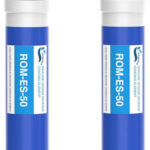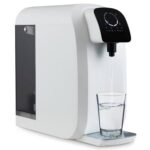
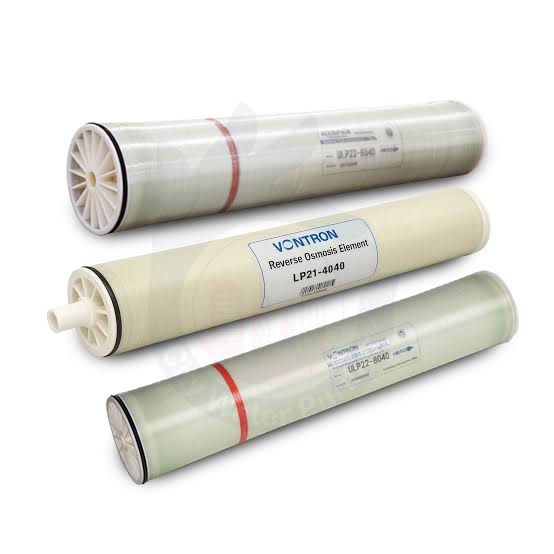
RO Membrane is the critical filtration component that separates dissolved contaminants from water in a reverse osmosis system. It determines how effectively the system reduces salts, minerals, heavy metals, and other dissolved impurities. A failing membrane can produce poor-tasting water, elevated TDS, slower production, and unnecessary operating costs. Before replacing one, checking water quality, system specifications, pressure, pretreatment, and membrane condition can prevent expensive mistakes.

What Is an RO Membrane?
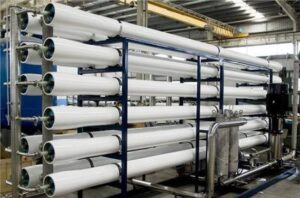
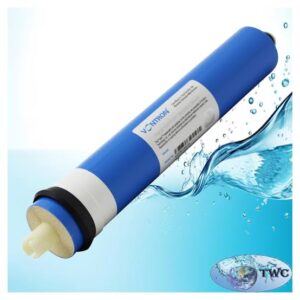
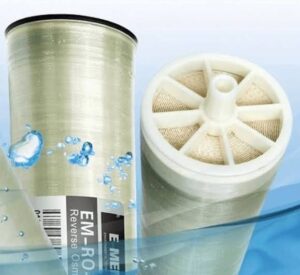
An RO Membrane is a semi-permeable filtration layer used in reverse osmosis water treatment. Water passes through the membrane under pressure, while many dissolved salts, minerals, contaminants, and unwanted substances are rejected. The purified stream becomes ro water, while concentrated contaminants leave through the reject stream. This process supports residential, commercial, industrial, and drinking-water applications.
A modern reverse osmosis system normally combines several stages. These may include a sediment filter, carbon filter, ro filter, membrane, post-treatment filter, storage tank, and optional UV or remineralization stage. The membrane performs the most demanding separation step. Its performance therefore depends heavily on the quality of water entering the system.
1. Check the Water Quality Before Replacing the RO Membrane
Water quality should be the first checkpoint before ordering replacement parts. Test TDS, hardness, pH, iron, sediment, and other relevant contaminants. Borehole water and well water can contain mineral-heavy contaminants that accelerate membrane fouling. Cloudy water, rusty water, scaling, unpleasant smell, and high TDS can also indicate pretreatment problems.
This matters because a new membrane may fail prematurely if the original water-quality problem remains unresolved. Sediment can clog filtration surfaces, while excessive hardness can encourage scaling. Iron can also damage membrane performance when pretreatment is inadequate. A professional assessment helps identify the actual cause before replacement.
2. Confirm the Membrane Specifications
Never select a membrane simply because it physically fits the housing. Check its GPD rating, dimensions, operating pressure, rejection characteristics, and compatibility with the existing system. A household unit may require a different specification from a high-flow commercial or industrial installation. A 400 GPD RO system, for example, has different production requirements from a large-scale water treatment plant.
The membrane should also match the system’s pump and pressure conditions. Incorrect specifications can reduce production or increase reject-water volumes. For this reason, the original membrane label and equipment documentation are valuable references. These details form an important part of a professional replacement guide.
3. Investigate the Real Warning Signs
A declining membrane can produce several warning signs. These include rising TDS, reduced water production, unusual taste, slower filling, and increased reject-water flow. However, these symptoms do not always mean the membrane itself has failed. Blocked filters, inadequate pressure, damaged seals, or pump problems can create similar symptoms.
Measure performance before replacing the component. Compare current TDS and production against the system’s expected specifications. This simple troubleshooting step can distinguish membrane failure from another system problem. It can therefore prevent an avoidable replacement cost.
4. Check the Pretreatment Filters
A membrane works best when incoming water has already passed through appropriate pretreatment. Sediment and carbon filters protect the membrane from particles, chlorine, and other damaging substances. If these filters are exhausted, replacing the membrane alone may provide only temporary improvement.
A complete maintenance guide should therefore consider the entire filtration chain. Check the sediment filter, carbon filter, pump, membrane housing, pressure tank, tubing, and connections. Some systems may also require a water softener before the membrane. Proper pretreatment improves efficiency and can extend membrane life.
5. Understand Membrane Pressure and Flow
Pressure is fundamental to reverse osmosis filtration because the system must overcome osmotic pressure. Insufficient pressure can produce low permeate flow and poor overall performance. Excessive pressure can also create equipment stress and unnecessary operating problems.
Check pump performance, pressure readings, flow rates, and system configuration. Residential systems, commercial systems, and industrial systems have different operating requirements. A professional installation should therefore follow the manufacturer’s specifications rather than relying on assumptions.
6. Consider the Membrane Type and Application
Different applications require different membrane configurations. A residential system for drinking water differs from a commercial system for water production. Industrial installations may require high-capacity membranes designed for demanding operating conditions.
Common applications include reverse osmosis system for home, under sink reverse osmosis, countertop systems, commercial treatment, industrial production, and whole-house filtration. Some installations also combine RO with UV, carbon filtration, remineralization, or water softening. The correct configuration depends on the incoming water and intended use.
7. Compare Replacement Cost With Total System Cost
Searching for RO membrane price or reverse osmosis membrane price is useful, but the cheapest component is not necessarily the most cost-effective choice. Consider membrane quality, expected lifespan, installation cost, maintenance cost, replacement frequency, and running cost. These factors provide a more realistic total cost calculation.
The cost of membrane of RO systems varies according to capacity, specification, brand, application, and supplier. Commercial and industrial membranes naturally have different requirements from domestic units. Ask for a clear quotation covering the membrane, replacement parts, labour, testing, and professional installation.
8. Inspect the Membrane Housing and Seals
A replacement membrane cannot perform properly if its housing is damaged. Inspect the housing for cracks, deformation, leaks, worn O-rings, and damaged connections. Check that the membrane seats correctly inside the housing.
Leaks around the membrane housing can reduce pressure and compromise system performance. Damaged seals can also introduce contamination after filtration. Replacing worn components during maintenance can be more efficient than repeatedly troubleshooting the same problem.


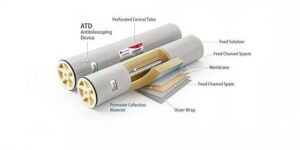
9. Follow the Correct Replacement Process
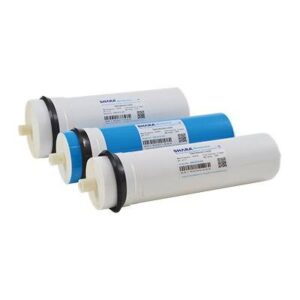
Replacing an RO Membrane requires more than removing the old component and inserting a new one. Shut down the system, isolate the water supply, release pressure, and remove the housing carefully. Inspect the housing before installing the new membrane.
After installation, flush the membrane according to the equipment requirements. Check for leaks and measure the initial TDS and production rate. The before-and-after measurements provide useful evidence of whether the replacement improved performance.
10. Choose a Reliable Supplier and Maintenance Partner
Where you buy replacement parts matters. A reliable supplier should understand membrane specifications, water chemistry, system capacity, installation requirements, and replacement parts. This is especially important for commercial facilities, hotels, hospitals, factories, schools, estates, restaurants, churches, and water-production businesses.
VistaGreen provides water-treatment expertise for customers across Nigeria and wider African markets. Its solutions support applications involving borehole water, well water, commercial treatment, industrial processes, and drinking-water production. Regional requirements can vary considerably across Accra, Kumasi, Tema, Tamale, Sunyani, Sekondi-Takoradi, Cape Coast, Elmina, Winneba, Keta, Ada Foah, and Ho.
Common RO Membrane Mistakes to Avoid
One common mistake is replacing the membrane without testing TDS or checking system pressure. Another is installing an incompatible membrane because its dimensions appear similar. Ignoring exhausted sediment and carbon filters can also shorten membrane life.
Avoid choosing solely by price. A dependable solution should consider water chemistry, capacity, specifications, installation requirements, and expected running cost. These checks make the replacement process safer, more efficient, and more predictable.
The same principle applies across Cotonou, Lomé, Abidjan, Monrovia, Freetown, Banjul, Cape Verde, and Dakar. Water sources and treatment requirements differ, so professional assessment remains important.
RO Membrane Replacement: Quick Checklist
Before replacing your membrane, check these essential points:
- Incoming water quality and TDS.
- Membrane GPD and physical specifications.
- Operating pressure and pump performance.
- Sediment and carbon pretreatment.
- Membrane housing and O-rings.
- Current production and rejection rates.
- Water taste, clarity, and odour.
- Replacement cost and maintenance requirements.
- Compatibility with the existing ro system.
- Professional installation and post-installation testing.
This checklist provides a practical beginner’s guide for homeowners and a useful reference for commercial operators. It also helps identify whether replacement is genuinely necessary.
Frequently Asked Questions
How long does an RO Membrane last?
Membrane life depends on incoming water quality, pretreatment, operating conditions, maintenance, and usage. Regular testing provides a better replacement indicator than relying only on a fixed timeframe.
What are the main signs of membrane failure?
Common signs include increased TDS, reduced water production, poor taste, unusual reject-water flow, and declining contaminant rejection. Testing helps confirm whether the membrane is responsible.
Can I replace an RO membrane myself?
Some domestic systems allow straightforward replacement. However, commercial and industrial systems often require professional inspection, installation, flushing, and performance testing.
Does a new membrane need new filters?
Not always, but exhausted sediment and carbon filters should be replaced when necessary. Installing a new membrane alongside overdue pretreatment can reduce its useful life.
Is replacing an RO membrane worth it?
Replacement can be valuable when the membrane is genuinely degraded and the rest of the system remains suitable. A performance assessment helps determine the most cost-effective option.
Conclusion
A replacement RO Membrane should never be treated as a simple spare-part purchase. Water quality, specifications, pressure, pretreatment, housing condition, cost, and installation all influence performance. Checking these factors first can prevent costly mistakes and restore cleaner, more consistent water production.
From residential systems to commercial and industrial applications, the right membrane must match the water source and treatment objective. VistaGreen supports professional water-treatment solutions across African markets, helping customers make informed decisions about filtration, maintenance, replacement, and system performance.
Whether the application is for a home, office, hotel, hospital, factory, school, estate, restaurant, or water-production facility, a careful assessment is the foundation of reliable treatment.
Get Your Water Treatment Solution!
🌐 Visit: https://www.vistagreen.africa/
📧 Email: info@vistagreen.africa
📞 Call/WhatsApp: +233 208 995 720, +234 911 416 6874
VistaGreen — Engineering Innovation. Building Trust.
At Vista Green, we provide Portable Toilets in Accra, Portable Toilet Price in Ghana, Mobile Toilets in Cotonou, Mobile Toilet for Hire, Portable Toilets for Seniors, Portable Toilets for RVs, FRP Portable Toilet, Readymade Toilet and Bathroom, Emergency Portable Toilet Rental, Portable Toilet Business in Ghana, Portable Toilet Rental Cost, Portable Chemical Toilet vs Flush Toilet, Portable Sink and Toilet, Portable Toilet Price in Cotonou, Portable Toilets for Sale in Ghana,
Water Filter and Purifier for Tank, Water Purifier in Ghana, Osmosis Water Purification, RO Water Purifier, Reverse Osmosis Machine, RO Technology in Water Purifier, Reverse Osmosis Water Treatment, Under Sink Reverse Osmosis System, whole home reverse osmosis, Residential Reverse Osmosis System, Tankless Reverse Osmosis System, Portable Reverse Osmosis System, Countertop Reverse Osmosis System, Water Softener and Reverse Osmosis System, RO Membrane,